

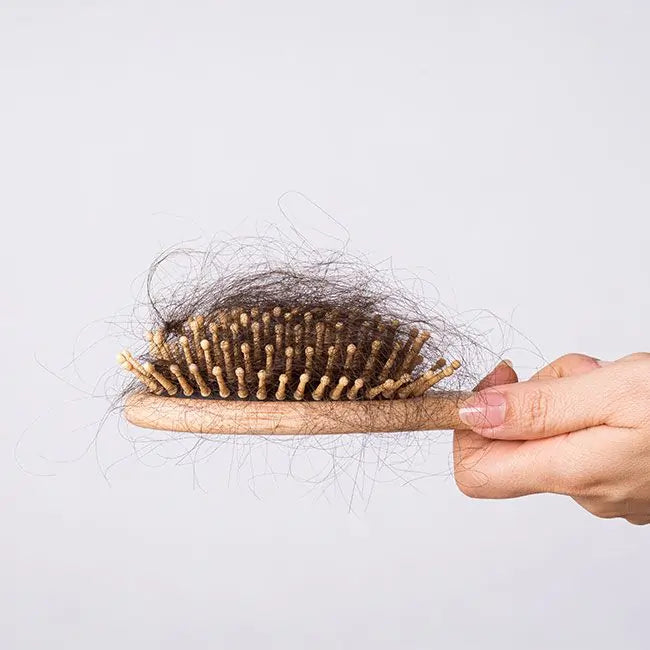
PCOS-related hair loss is one of the most emotionally devastating symptoms. If you're noticing your hair thinning, your part widening, or losing entire strands, know that you're not alone. Approximately 40% of women with PCOS suffer from androgenic alopecia, also known as female pattern baldness.
In this article, we'll explore the precise hormonal causes of this hair loss and, most importantly, the natural solutions that have proven effective for restoring healthy, thick hair.
Why Does PCOS Cause Hair Loss?
The Role of Excess Androgens
PCOS is characterized by a major hormonal imbalance: excess androgens (male hormones like testosterone and DHT). These hormones in overdrive have a devastating effect on your hair follicles:
On the scalp: Androgens progressively shrink hair follicles (a phenomenon called miniaturization). Result: hair becomes increasingly fine, short, and light before stopping growth completely.
On the face and body: Paradoxically, these same hormones stimulate unwanted hair growth (hirsutism) on the chin, upper lip, chest, or belly.
Chronic Inflammation: The Silent Enemy
PCOS often comes with chronic low-grade inflammation that weakens hair health. This inflammation damages follicles and accelerates the hair loss cycle.
Insulin Resistance and Its Consequences
70% of women with PCOS have insulin resistance. This condition worsens androgen production and creates a vicious cycle that accelerates hair loss. Elevated insulin directly stimulates the ovaries to produce even more testosterone.
Stress and Cortisol
PCOS often generates chronic stress, whether physical (inflammation, insulin resistance) or emotional (anxiety related to symptoms). Elevated cortisol further disrupts hormonal balance and weakens hair follicles.
Distinctive Signs of PCOS-Related Hair Loss
How do you know if your hair loss is PCOS-related? Here are the characteristic signs:
- Progressive thinning at the crown and along the center part
- Widening of the center part (typical pattern of female androgenic alopecia)
- Hair that becomes thinner and more fragile before falling out
- Diffuse loss without completely bald patches (unlike alopecia areata)
- Concurrent hirsutism: excessive hair growth on face or body
- Increased loss during washing or brushing
If you have several of these signs along with other PCOS symptoms (irregular periods, acne, weight gain), your hormones are likely the culprit.
Diagnosis: Essential Tests
To confirm the link between your hair loss and PCOS, your doctor should prescribe:
- Total and free testosterone
- DHEA-S (dehydroepiandrosterone sulfate)
- SHBG (Sex Hormone Binding Globulin) - often low in PCOS
- Fasting glucose and insulin to assess insulin resistance
- TSH and thyroid hormones (thyroid disorders are common with PCOS)
- Ferritin (low iron worsens hair loss)
Natural Solutions to Stop Hair Loss and Promote Regrowth
1. Rebalance Hormones with Adaptogenic Herbs
Medicinal plants represent a gentle yet powerful approach to regulating androgens and supporting hair health.
Spearmint is particularly effective: studies show it significantly reduces free testosterone in women with PCOS. It acts as a natural anti-androgen.
Ashwagandha is an exceptional adaptogen that regulates cortisol, improves stress response, and supports overall hormonal balance. By reducing stress, it prevents cortisol-related hair loss.
Nettle has anti-androgenic properties and helps block the conversion of testosterone to DHT (the most damaging form for hair).
Ginger fights chronic inflammation and improves blood circulation to hair follicles, promoting their health and growth.
Our Complete Solution: Hormone Balance Brew
At Baïa Wellness, we've formulated the Hormone Balance Brew specifically for women with PCOS suffering from hormonal symptoms like hair loss.
This unique infusion combines 7 medicinal plants carefully selected by naturopaths:
- Spearmint: reduces androgens and fights hirsutism
- Ashwagandha: regulates cortisol and calms stress
- Nettle: blocks DHT and nourishes follicles
- Cinnamon: improves insulin sensitivity
- Mulberry leaf: stabilizes blood sugar
- Jujube: supports sleep and hormonal balance
- Ginger: fights inflammation
How to use it: Drink 1-2 cups daily (preferably morning and evening) for at least 3-6 months for optimal results. Consistency is key to success.
What our customers say:
- "After 3 months, my hair loss has significantly slowed down and I see new baby hairs growing along my part!" - Marie, France
- "My cycles are regular and my hair is much stronger" - Emma, London
2. Optimize Nutrition for Hair Health
Favor a low glycemic index (low-GI) diet to improve insulin sensitivity and reduce androgen production:
- Unlimited vegetables (especially cruciferous: broccoli, cauliflower, kale)
- Quality protein at every meal (organic eggs, fatty fish, legumes)
- Healthy fats (avocado, nuts, olive oil, omega-3 rich fish)
- Whole grains in moderation (quinoa, brown rice, oats)
Avoid:
- Refined sugars and ultra-processed products
- Dairy products (especially skim) which can increase insulin
- Excess simple carbohydrates
Essential nutrients for hair:
- Iron: lean red meat, spinach, lentils (check your ferritin)
- Zinc: pumpkin seeds, oysters, meat
- Biotin: eggs, almonds, sweet potato
- Vitamin D: fatty fish, moderate sun exposure, supplementation if needed
- Omega-3: wild salmon, sardines, flaxseeds, walnuts
3. Targeted Supplements
Inositol (Myo-inositol and D-chiro-inositol): This supplement improves insulin sensitivity and reduces androgens. Dosage: 2000-4000 mg of myo-inositol daily.
N-acetyl-cysteine (NAC): Powerful antioxidant that improves ovarian function and reduces inflammation. Dosage: 600 mg, 1-2 times daily.
Vitamin D3: Essential for hormonal and follicular health. Test your levels (goal: 50-80 ng/mL).
Omega-3 (EPA/DHA): Reduces inflammation and supports hair health. Dosage: 2000-3000 mg daily.
Saw Palmetto: Naturally blocks 5-alpha-reductase, preventing testosterone conversion to DHT.
4. Manage Stress and Cortisol
Chronic stress worsens all PCOS symptoms, including hair loss. Implement daily practices:
- Meditation or heart coherence: 10-15 minutes daily
- Hormonal yoga: specific sequences for hormonal balance
- Quality sleep: 7-9 hours nightly, go to bed before 11 PM
- Moderate physical activity: walking, swimming, yoga (avoid overtraining which increases cortisol)
5. External Scalp Care
Rosemary essential oil: As effective as minoxidil according to some studies. Dilute in carrier oil (jojoba, castor) and massage scalp 2-3 times weekly.
Scalp massages: Stimulate blood circulation to follicles. 5 minutes daily with fingers or massage brush.
Avoid: harsh shampoos, excessive heat (blow dryers, straighteners), tight hairstyles that create tension on follicles.
6. Treat Insulin Resistance
This is THE priority for 70% of women with PCOS. Better insulin sensitivity = fewer androgens = less hair loss.
Effective strategies:
- Walk after meals (15-20 minutes)
- Strength training 2-3 times weekly
- Moderate intermittent fasting (16:8) if suitable for you
- Cinnamon, chromium, and berberine supplementation
- Our Hormone Balance Brew which contains cinnamon and mulberry leaf to stabilize blood sugar
How Long Before Seeing Results?
Be patient: hair grows slowly (about 1 cm per month). Here's a realistic timeline:
1-2 months: Slowing of hair loss, hair becomes less thin 3-4 months: Near-complete stop of excessive loss, visible regrowth begins (baby hairs) 6-12 months: Noticeable increase in density and hair thickness
The key is consistency and patience. Hormonal rebalancing takes time, but results are lasting when you adopt a holistic approach.
When to Consult a Specialist?
See a doctor or dermatologist if:
- Hair loss is sudden and massive
- You have completely bald patches
- You experience scalp pain or itching
- No improvement after 6 months of natural approach
Medical treatments like spironolactone (anti-androgen) or minoxidil can be considered alongside natural solutions in severe cases.
In Summary: Your Natural Action Plan
- Test your hormones (androgens, insulin, thyroid, ferritin)
- Adopt an anti-inflammatory, low-GI diet
- Integrate hormone-regulating plants like our Hormone Balance Brew
- Supplement with inositol, NAC, omega-3, and vitamin D
- Manage your stress with meditation, yoga, and quality sleep
- Treat insulin resistance through exercise and nutrition
- Care for your scalp with massages and rosemary oil
PCOS-related hair loss is not inevitable. By addressing the deep hormonal causes with a natural, holistic approach, you can not only stop hair loss but also promote beautiful regrowth.
At Baïa Wellness, we believe nature offers powerful solutions to restore hormonal balance and self-confidence. Our mission is to support you on this journey to optimal hormonal health.
Ready to take action against PCOS-related hair loss?
Discover our Hormone Balance Brew, specially formulated by naturopaths to rebalance your hormones naturally.
✨ 7 synergistic medicinal plants ✨ Reduces androgens and inflammation ✨ Improves insulin sensitivity ✨ 60-day money-back guarantee
Start my hormonal rebalancing →
This article is provided for informational purposes only and does not replace professional medical advice. Always consult your doctor before starting any new treatment or supplement.
FAQ: Hair Loss and PCOS
Q: Is PCOS-related hair loss reversible? A: Yes, in most cases! By rebalancing your hormones and adopting the right strategies, you can stop hair loss and promote regrowth. The key is to act quickly and stay consistent with your efforts.
Q: How long does it take to see results? A: Expect 3-6 months for noticeable improvements. First signs (slowing hair loss) typically appear after 6-8 weeks of consistent approach.
Q: Can I use Hormone Balance Brew if I'm taking medications for PCOS? A: Our infusion is natural and generally compatible with most treatments. However, we recommend consulting your doctor before integrating it, especially if you're taking hormonal or diabetes medications.
Q: Can stress really worsen PCOS-related hair loss? A: Absolutely. Chronic stress elevates cortisol, which worsens insulin resistance and androgen production. Managing stress is a priority in any hormonal rebalancing protocol.
Q: Do anti-hair loss shampoos work for PCOS? A: Shampoos alone aren't enough because the problem is hormonal and internal. However, combined with a holistic approach (nutrition, herbs, supplements), targeted external care (rosemary oil, massages) can support regrowth.
Scientific sources:
- Grant P. "Spearmint herbal tea has significant anti-androgen effects in polycystic ovarian syndrome" Phytotherapy Research, 2010
- Saleem F. et al. "N-acetylcysteine in Polycystic Ovary Syndrome" Reproductive Biology and Endocrinology, 2015
- Panidis D. et al. "Serum resistin levels in women with polycystic ovary syndrome" Fertility and Sterility, 2004<
Share:
Understanding Irregular and Painful Periods